About Us
The Deltos Project: Gender & Sexuality In The Ancient Mediterranean Topics, Sources, Theories, & Methods
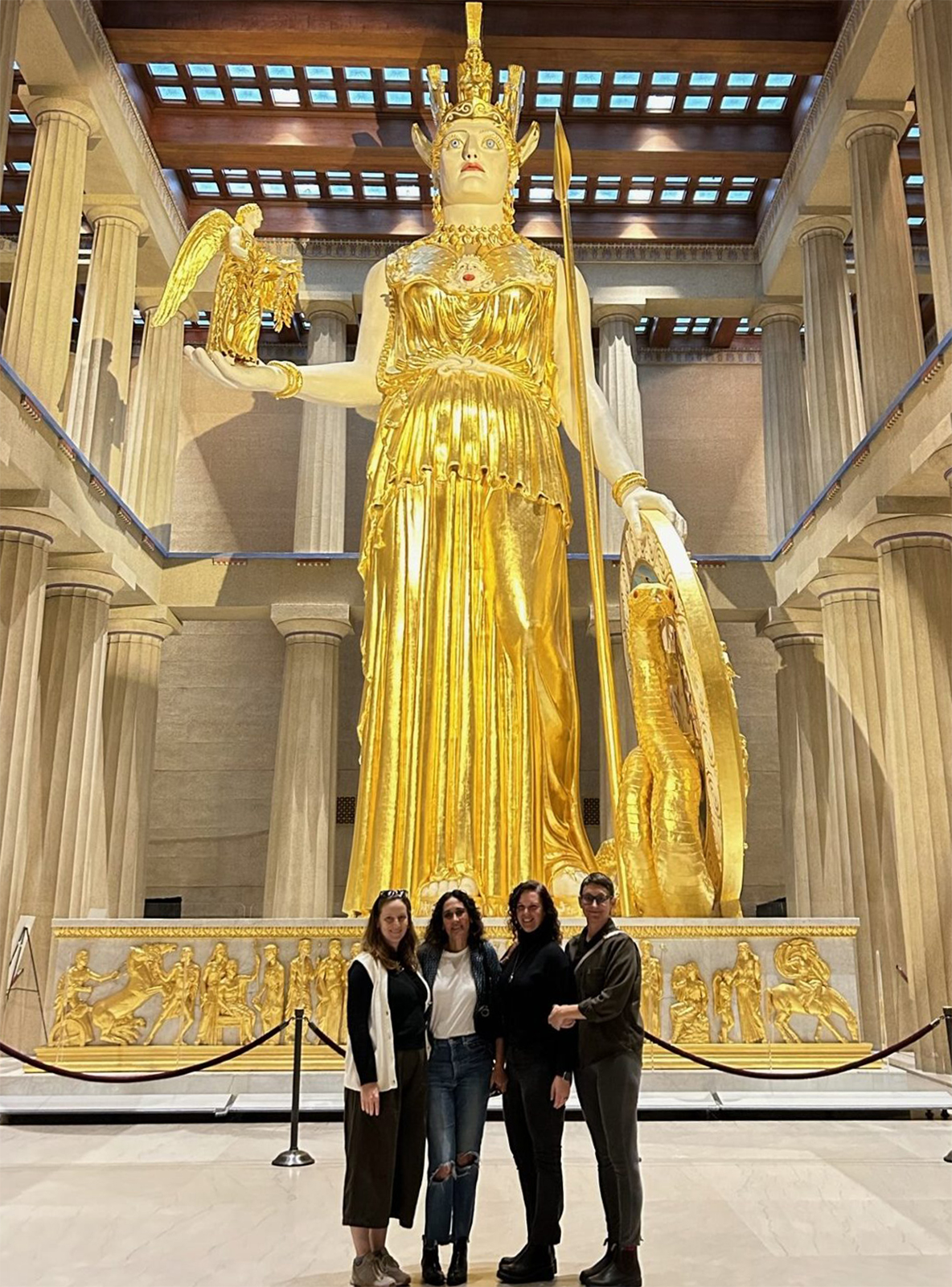
Editorial Team:
Sarah Blake, York University
Devon Harlow, Connecticut College
Chiara Sulprizio, Vanderbilt University
Jody Valentine, Pomona College
Project Description:
Our collaboration brings together four scholars committed to exploring how best to support research and teaching topics related to sex and gender in the ancient Mediterranean with the twin aims of (1) open-access and broad accessibility of resources and (2) critical conversations around meaningful pedagogy in this field. We have identified a need for a comprehensive and accessible resource centre for scholars and teachers in the field of ancient sexuality and gender.
While several textbooks dedicated to the subject exist, we have each in our own practice found these textbooks in some way to lack the range, depth, and engagement with critical theory that we find necessary for working in these fields today. Several diverse online hubs also offer important resources for teaching (WCC’s Diotima and Reflective Pedagogy Series; The Worlds of Roman Women at feminaeromanae.org), research (Eugesta), and critical conversations (Eidolon) on gender and sexuality in the ancient Mediterranean. Our envisioned centre will bring together these and other resources with the aim of undoing the binary division of research and teaching. We will organize our materials into an open set of Modules that can be integrated into a wide variety of courses, or tapped for a plethora of research projects. Modules will include “Topics” (e.g.: “the Amazons” and “Vestal Virgins”), “Texts and Genres” (e.g: Plato’s Symposium, Roman Elegy), and “Theories” (e.g. Critical Race Theory, Trans Theory). Our project foregrounds the principles of ease, experimentation, and ethical coherence in teaching and learning about gender and sexuality in the ancient Mediterranean.
We are committed to intersectional feminist, anti-racist, pro-LGBTQIA+, and decolonizing content and methods. We support genuine collaboration, welcome additional contributors (educators, scholars, students, creatives), and are committed to disrupting the individualistic and competitive culture of academia. We will develop resources for the incorporation of radical, transformative pedagogy that will enable the creation of aligned curriculum and praxis.